Why Tuition Protection Matters for Independent Schools

Tuition is the primary revenue stream for independent schools, funding the people, programs, and experiences at the heart of their missions. Schools build their budgets around enrollment and projected net tuition revenue, often making staffing, programming, and spending decisions months before the school year begins.
How Unexpected Student Withdrawals Affect Families
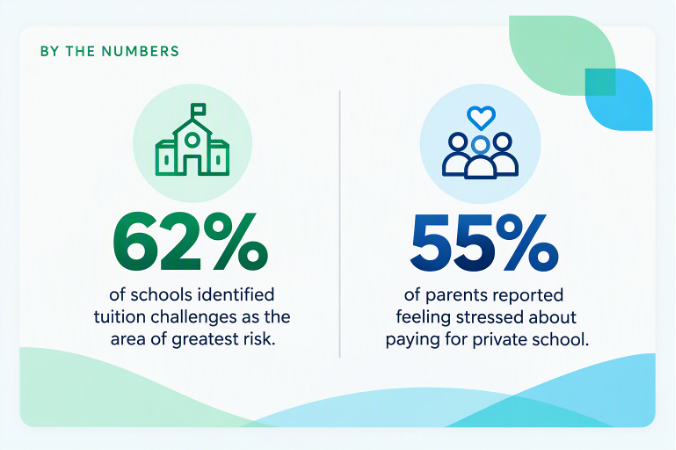
Yet tuition dependence can create financial uncertainty. In the Blackbaud Institute’s latest Risk Readiness Report, 62% of K–12 schools surveyed identified tuition challenges as the area of greatest risk. Demographic changes, increased competition, affordability concerns, and other pressures can all impact enrollment and revenue, making it increasingly important for schools to understand where they may be exposed and how they can prepare.
Managing tuition risk, including midyear withdrawals, must be part of a school’s overall financial sustainability strategy. When prepared, your school can protect budgets while helping families navigate uncertainty when things don’t go according to plan.
A Clear Tuition Refund Policy Is a Starting Point
A clear tuition refund policy establishes what families can expect if a student leaves before the school year is over. Adding that policy and your financial aid policy manual to your admissions checklist each year helps ensure families understand the contracts they are signing. It also gives the business office a consistent framework for handling finances rather than making difficult decisions on a case-by-case basis.
That consistency matters.
A tuition refund policy sets expectations. Tuition protection adds another layer of risk management.
What Is Tuition Protection?
Tuition protection—sometimes referred to as tuition insurance or tuition refund protection—helps safeguard schools andfamilies from the financial impact of an unplanned student withdrawal.
When schools have Blackbaud’s integrated contracts and opt into tuition protection from a partner like Vertical Insure, that partner reimburses families for eligible tuition when a student withdraws for a covered reason. This allows the school to retain tuition payments it has already incorporated into its budget rather than being responsible for issuing a refund itself. And it helps maintain the relationship with the family, leaving room for that student to return and reducing reputational risks in the broader community.
That kind of coverage benefits both the family and the school. Policies differ, so schools should evaluate covered reasons, exclusions, reimbursement limits, and how the insurance works alongside their existing tuition refund policy.
When considering whether tuition protection fits into their larger strategy, school leaders might ask:
- What financial impact could an unexpected withdrawal have on the school and the family?
- How does the school’s current tuition refund policy address that exposure?
- How clearly are families informed about what happens if a student withdraws?
The answers will vary by institution. What matters is considering these questions before a midyear withdrawal forces administrators and families to make difficult decisions.
Consider Tuition Protection as Part of a Broader Financial Strategy
No single approach can address all the pressures facing independent schools. Enrollment shifts, tuition affordability, financial aid, fundraising, and rising costs all influence a school’s budget, making it important to think about revenue holistically.
That includes looking beyond individual revenue streams. Align enrollment, development, and the business office around shared goals to give school leaders a better view of how those revenue sources work together to support long-term health.
Tuition protection fits within that broader conversation by addressing one specific area of uncertainty: What happens when an expected enrollment commitment changes during the school year?
For business leaders evaluating their current approach, that is more than a standalone insurance consideration. It becomes part of a larger discussion about managing risk, safeguarding revenue, and preparing for situations a school can’t always predict.
Preserving More Than Tuition Revenue
Planning is only one side of the tuition protection conversation. Tuition policies can also shape a family’s experience with the school, particularly during challenging times. A prepared school can react with empathy and offer solutions.
Clear policies and expectations established in advance can bring greater predictability to those situations. That matters because the goal isn’t simply to maintain tuition revenue. Schools are balancing their responsibility to remain financially healthy with their commitment to the families and students they serve.
Take a Closer Look at the Hidden Cost of Student Withdrawals
Learn more about the impact of student withdrawals and how schools can protect both their budgets and the families they serve.