How a Project Charter Can Help You Have a Successful Fund Accounting Software Implementation

Many fund accounting system implementations struggle not because the new software is wrong, but because teams aren’t aligned and the organization underestimates the amount of change involved. That’s where a project charter becomes one of your most important tools.
A strong software project charter brings transparency and structure to the early stages of your implementation. It helps you navigate the emotional and operational realities of change management and keep your transition on track.
This guide walks through what a project charter is in the context of software implementation, why it’s essential for change management, and how to build one using 10 key elements.
How Does a Project Charter Support Better Software Implementation?
A project charter is a brief, formal document that outlines the purpose, scope, goals, contributors, and risks of your project. It serves as the central source of truth throughout the project lifecycle and is especially critical when you’re implementing new fund accounting software.
During a fund accounting system transition, a project charter functions as a change management project charter—a tool that:
- Aligns stakeholders around the need for change and the long‑term vision for the new system
- Defines the “why,” reducing fear, resistance, or assumptions that the change is temporary
- Helps teams understand where they are on the change curve, recognizing that change often feels uncomfortable before it feels beneficial
- Provides clear expectations and decision‑making structure when workflows, data, and systems evolve
Your charter isn’t just documentation. It’s the backbone of your project’s change management strategy.
Why a Project Charter Is Critical for Change Management
Implementing new fund accounting software is as much a technical shift as it is a people shift. Teams may be used to the quirks of a legacy system, rely on established workarounds, or feel overwhelmed by learning something new.
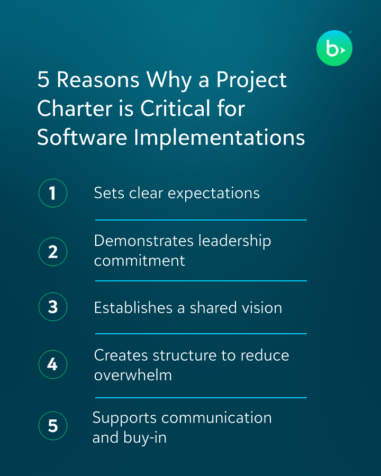
Your project charter helps combat these forces by:
1. Setting Clear Expectations
Uncertainty decreases when your team members understand why the change is happening, what the timeline looks like, and what success means.
2. Demonstrating Leadership Commitment
Visible sponsorship reassures staff that the change is real, necessary, and supported.
3. Establishing a Shared Vision
Teams can better navigate discomfort when they know what the future state looks like, such as improved reporting, streamlined workflows, better compliance, and more strategic financial management.
4. Creating Structure to Reduce Overwhelm
A charter breaks down what might feel like an intimidating transition into clear roles, responsibilities, and milestones.
5. Supporting Communication and Buy‑In
Regular updates anchored to the charter help maintain trust and address concerns early.
By mitigating negative forces and amplifying positive forces, like leadership support, training, stakeholder engagement, and alignment with organizational strategy, your project charter helps flatten the change curve and move your organization forward with more confidence.
10 Elements Every Software Implementation Project Charter Should Include
Here are 10 essential elements that every project charter should include. You can get a downloadable project charter template on our resource center.
1. Project Overview
Start by providing basic details of your project. Give your project an easily identifiable name, such as Fund Accounting Software Implementation. Identify the person who will be the primary project manager as well as the member of leadership who will make the final decisions. Note when the project was approved, the proposed project start date, and when the project is expected to be completed.
2. Business Case
Explain why the project is worth doing now. Consider challenges like outdated workflows, inefficient reporting, limited visibility, or lack of scalability.
Questions your business case should answer include:
- What current problems will this solve?
- How does the new system align with long‑term financial health and strategy?
- What are the consequences of not pursuing this change?
3. Problem/Opportunity Statement
Your problem or opportunity statement is an objective description of the challenges associated with the gap between the current-state and desired future-state. The problem statement should not presume a cause or prescribe a solution but should answer questions such as:
- What’s wrong, or not meeting the needs of our stakeholders?
- When and where do problems occur?
- How big is the problem?
- What is the impact of the problem?
Outlining these challenges in your project charter will keep your team focused on solutions that can alleviate these issues without getting pulled into new directions.
4. Statement of Scope
With so many issues that could be addressed, scope creep—the tendency for a project to expand beyond its originally intended purpose—can quickly bog down a project. However, a clearly defined scope is critical to keeping a project on track throughout its life cycle.
Define what is in scope—and what is not—to prevent scope creep. For a fund accounting implementation, this may include:
- Data migration (often 3–4 years of history)
- Account structure redesign
- Financial report consolidation strategies for multi‑entity organizations
- Integration planning with CRM or other systems
5. Project Team
List the names, titles, and respective roles of your core project team. This includes the project manager and sponsor identified in the overview. Also identify other decision-makers or people who need to be involved, including any external consultants. You’ll want your IT team to be aware of the project so they can review any data security requirements or integrations that need to be established, for example.
6. Goals and Metrics
What does success look like? Document the specific goals you plan to accomplish, including any key performance metrics (KPIs) you’ll use to measure success. For your fund accounting implementation, your goals might include:
- Target go-live date
- Reduced manual data entry
- Improved reporting accuracy or speed
- Completion of training milestones.
Follow best practices with your goals, and make sure they are specific, measurable, attainable, relevant, and have a specific time frame.
7. Resources
What resources do you need to fully support the lifecycle of this project? Are there budget requirements? Make sure to document any specific resources necessary to successfully complete your initiative on time including:
- Skills and labor
- Financial/budgetary
- Technology/software
- Dedicated space
8. Risks
No change management undertaking is without its risks. Proactively identify potential risks so you can realistically consider likely barriers to success and how to address them before they arise. This can include internal issues such as resistance to change as well as external issues such as a vendor with new functionality in production but not available yet.
Include mitigation strategies inspired by the guide, such as communication plans, increased training, or leadership engagement.
9. Deliverables and Timeline
Compile a list of your key deliverables along with a tentative completion date for each. Leave space on your list to track when each deliverable is completed. As you are building your timeline, be cognizant of dependencies that might affect other deadlines.
Be sure to have a realistic view of how long a project like this will take. For fund accounting implementation, expect at least 90 days, broken down into three phases:
- Days 1–30: Planning and team alignment
- Days 30–60: Configuration and workflow design
- Days 60–90: Testing and go‑live readiness
10. Other Considerations
Remember that your project charter should be clear and concise. It should serve as a guiding document that will help to keep your stakeholders informed, team members focused, and initiative on track.
Build a Strong Foundation for Your Fund Accounting System Implementation
Changing your fund accounting software can be intimidating. But with the right project management processes in place, you can create a clear path to an accounting system that meets your needs as a nonprofit organization. Your project charter is the first step to making sure you understand the goals and business case for your new system, so everyone understands how your fund accounting software will help you save time, maintain compliance, and make better data-driven decisions.
Ready to confidently navigate your fund accounting software implementation? Download the guide, From Legacy to Leading: A Guide to Planning and Managing Your Software Implementation, for deeper guidance, including a 90-day roadmap and strategies to support your team through every phase of the transition.