How to Build a Data-Driven Culture in Grantmaking

When your team can rely on the data in front of them, everything about your grantmaking becomes clearer. Decisions move faster. Reporting feels lighter. Conversations with grantees feel more grounded.
But when your systems deliver inconsistent, incomplete, or siloed information, your team’s confidence erodes, and staff begin relying on instincts instead of insight for important decisions.
A trustworthy data culture isn’t created by software alone. It’s built through shared standards, cross‑team alignment, and a collective commitment to keeping information clean, connected, and accessible. Here is a look at what a strong data culture could look like in your grantmaking organization and a few steps to help you get there.
What a Healthy Data Culture Looks Like
A strong data culture shows up in both the structure of your systems and the everyday experiences of your staff. It starts with shared definitions and standards that eliminate guesswork. When every department works from the same expectations, everyone benefits.
Shared Ownership and the Confidence It Builds
In a healthy data culture, it’s obvious who owns each dataset and how it should be maintained. When roles are clear, staff know exactly where to go with questions, and they spend far less time compensating for confusion or outdated processes.
Imagine a grants manager pulling a report the day before a board meeting. Instead of wondering whether the numbers in her spreadsheet match the finance team’s version, she trusts her system because everyone is following the same standards, and the data is consistently maintained.
Daily Workflows without Workarounds
Across the organization, staff no longer maintain “secret spreadsheets” to reconcile data inconsistencies. Program officers see the same grantee information that finance sees. Leadership reviews grantmaking dashboards built on clean, current data. Decisions feel grounded instead of gut‑based.
Why Clean, Reliable Data Matters in Grantmaking
Good data gives your organization the clarity it needs to move with purpose. When information is reliable and easy to interpret, teams make decisions with confidence, communicate more clearly, and spend far less time untangling avoidable inconsistencies.
More Accurate Reporting and Greater Transparency
Board reports, public disclosures, and impact narratives rely on trustworthy data. When information is outdated or inconsistent, stakeholders question the story behind the numbers, and your grantmaking impact feels less clear. Clean, current data prevents this misalignment.
Better Stewardship—and Fewer Embarrassing Mistakes
Imagine a grantee receiving two conflicting emails about a payment schedule, or a donor getting duplicate solicitations. These errors are awkward, and they erode trust. Clean data prevents duplicate records, ensures contact details are correct, and helps teams communicate with confidence.
A More Streamlined Grantee Experience
When staff can see complete, consolidated information, their interactions with grantees become smoother. Fewer back‑and‑forth emails. Fewer “let me check with another department” delays. Just clearer, quicker support, which strengthens relationships.
AI‑Readiness and Smart Scalability
AI tools only work as well as the data feeding them. Clean, consistent data powers automated workflows, predictive insights, and intelligent dashboards, all of which allow grantmaking teams to scale impact without adding complexity.
Key Foundations of a Strong Data Culture
A healthy data culture is built on a handful of core elements that work together to support clarity and consistency. These building blocks help transform data from something your team maintains into something your team actively uses to inform decisions and strengthen relationships.
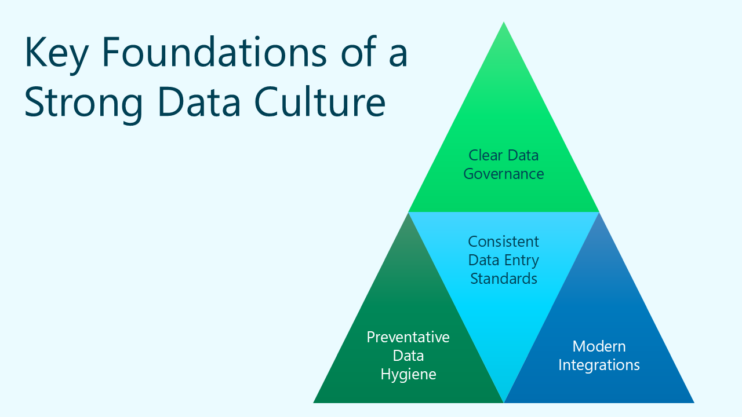
Clear Data Governance
Governance ensures everyone understands how data is created, stored, accessed, and updated. It sets the rules, including ownership, classification, and retention standards, so no one operates in the dark.
If your finance team updates vendor addresses directly in their system, but your grants team updates those same addresses in the GMS, there will be discrepancies. Governance prevents this kind of drift.
Simple, Consistent Data Entry Standards
Even the most advanced systems falter without shared entry guidelines. Clear standards, such as what fields are required, how names should be formatted, and what constitutes a complete record, keep your data usable.
New staff shouldn’t have to guess whether to write “St.” or “Street.” Standards eliminate avoidable inconsistency.
Preventative Data Hygiene
Healthy data requires proactive management. Perform regular queries to help identify duplicates, outdated fields, and missing information. System controls, like required formats for emails, prevent errors before they enter your database.
Modern Integrations That Reduce Manual Work
Integrations reduce rekeying and ensure information flows cleanly between your grantmaking system and tools like fund accounting or CRM platforms. They standardize fields, prevent duplicates or manual entry errors, and create a more connected data ecosystem.
Practical Steps to Start Strengthening Your Data Culture
You don’t have to overhaul everything at once. Sustainable change is built through manageable steps. Here are five to help you get started.
1. Build a Cross‑Functional Data Champion Team
Gather representatives from program, finance, operations, and leadership. This team anchors the culture shift and ensures improvements don’t fall solely on one department. It also makes sure all parts of the organization are represented in the changes.
2. Identify Where Data Issues Hurt the Most
Maybe duplicates are skewing reports. Maybe inconsistent organization names are slowing down payments. Start where the pain is sharpest—that’s where your early wins will be.
3. Conduct a Lightweight Data Inventory
Document where key data lives, who updates it, and how often. You don’t need a full audit to uncover patterns and risks. Even small inventories reveal ownership gaps and outdated storage locations.
4. Pilot Standards Before Scaling
Choose one program area, form, or workflow to refine. Test your standards, gather feedback, and adjust. Then roll them out more broadly.
5. Commit to Ongoing Review
Strong data cultures evolve. Quarterly or semi‑annual reviews help teams assess what’s working, identify new challenges, and maintain momentum.
How Clean Data Unlocks AI‑Powered Processes
AI can strengthen grantmaking, but only when the data behind it is solid. Here are three ways having a strong data culture can improve how you use modern grantmaking tools.
Smarter Dashboards and Insights
AI‑powered analysis surfaces patterns that might otherwise go unnoticed, such as shifts in applicant demographics, emerging funding clusters, or anomalies in program outcomes. But inconsistent data makes these insights unreliable.
More Confident Automation
Automated workflows depend on clarity. When classifications, statuses, and ownership are consistent, automation can route tasks, flag issues, and streamline approvals, giving staff more time for higher‑impact work.
Predictive Capabilities That Scale
AI can help forecast demand, identify promising applications, or highlight potential risks, but only when fed with complete, connected historical data.
Building Trust, One Data Habit at a Time
The shift toward a strong data culture doesn’t happen overnight, but it’s one of the most powerful investments a grantmaking organization can make. It improves staff confidence, strengthens stewardship, supports more efficient workflows, and helps teams build deeper relationships with grantees and communities. It also lays the foundation for future‑ready tools that amplify your impact.
When your organization commits to better habits, clearer standards, and shared responsibility, your data becomes one of your greatest strategic assets, and your team gains the confidence to use it fearlessly.
Ready to dig deeper into good data governance for your grantmaking organization? Check out the white paper, Data Governance for Fundraising Grantmakers: Protecting Your Most Valuable Asset.