Moves Management Overview: An Approach to Fundraising Based on Donor Stages
Moves management is a technique used by fundraisers to move donors through the donor lifecycle, from prospect to major donor. It involves tracking and planning each “move” or interaction with a donor to foster a strong relationship and increase engagement over time.
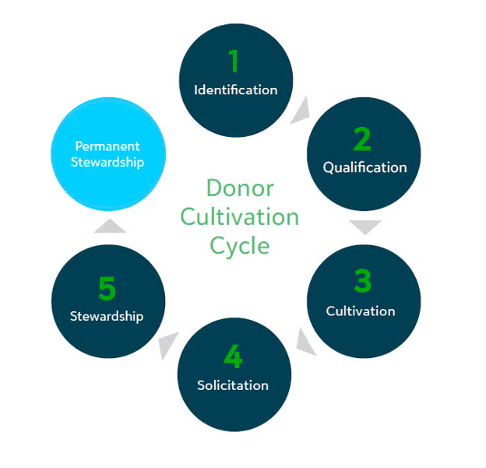
While the donor cultivation lifecycle describes the donor’s journey and the progression of their relationship with your organization, moves management refers to how the fundraising team manages the donor relationship. Picture all of the nudges, interactions, and experiences you have with donors. From an initial email outreach to one-on-one lunches, facility tours, and event invites, each of these is a relationship-building move that moves the donor into the next stage of the cycle.
When you track and actively manage a donor’s movement through the donor lifecycle, you’re following a structured path for cultivating donor relationships.
Moves Management Tips for Each Stage
Identification Stage: Research and Screen Prospects
In the identification stage, you cast a wide net to find potential donors who have both the financial capacity to give and an affinity for your mission. Your primary goal here is to build a pool of prospects large enough to filter down to the most promising leads. At this point in the process, don’t worry about whether donors are a perfect fit. You’re looking at their broader characteristics to see if they could be a good fit.
Identification Moves and Best Practices
To effectively build your prospect list, your moves should focus on learning more about potential donors.
- Conduct targeted wealth screening: Use prospect research tools to estimate net worth, review giving history, and find donors with an affinity for your cause. This move allows you to filter a large list down to those with the financial capacity and potential interest in making a large gift.
- Search for public and private trigger events: Set up alerts or monitor business journals and financial news for major life changes in your prospect pool, such as business sales, IPOs, large inheritances, high-profile career moves, or retirements. These events often precede a change in philanthropic activity, making the occurrence of a trigger event the perfect time to reach out.
- Leverage internal network referrals: Reach out to your board members, executive staff, and major donors for referrals. A personal introduction dramatically reduces the cultivation time later on.
Example of the Identification Move in Action
You are researching alumni to support a new $50 million engineering building for your university. You cross-reference your database of alumni donors with public data and discover that Mr. David Lee, a 1995 alumnus of the engineering program, recently sold his manufacturing firm. While he is a lapsed annual fund donor, his past connection and capacity to give could make him a good fit for your fundraising initiative.
Qualification Stage: Make the Initial Outreach
In the qualification stage, you evaluate prospects to either qualify them as leads or disqualify them entirely. Your goal is to determine if the prospect has the capacity and affinity to be worth the investment of your time or energy. This could include your first personalized move, such as a brief introductory call or an invitation to a low-pressure event. You consider a donor qualified once you have a clear understanding of their potential giving level and their alignment with your mission.
Qualification Moves and Best Practices
Focus on confirming the value of a prospect before you commit significant staff resources. Potential moves could be:
- Extending a warm outreach: Initiate a simple, personalized interaction, such as a note or email, to introduce a relevant staff member or board member.
- Holding initial discovery meetings: Use introductory meetings to learn about the prospect’s interests and values, rather than focusing on the ask.
- Documenting interest and giving history: Record specific details about the prospect’s connection to the cause and their past giving to other organizations in your CRM.
Example of the Qualification Move in Action
You send Mr. Lee a personalized email congratulating him on his business success and inviting him to a small, private luncheon with the faculty leading the research in the new building. The goal is to get him to attend so you can assess his current interest, with the hope of moving him from lapsed annual donor to major donor. Mr. Lee accepts the invitation and shows particular interest in the robotics lab.
Master the moves management stages: Register for the on-demand webinar
Cultivation Stage: Build the Relationship
The cultivation stage has the most moves of any stage. It’s where you dedicate time and energy to building a meaningful relationship with your donor. Your objective is to educate, engage, and excite the prospect about your mission and the impact of their potential support.
Your moves are focused on sharing your organization’s value to the mission. This could be sharing impact stories, inviting prospects to mission-relevant events, and providing them with exclusive access or information tailored to their interests.
Cultivation Moves and Best Practices
Focus on building trust and demonstrating the mission’s impact with moves that are specific to the donor’s interests.
- Regular touchpoints: Send the prospect personalized, high-value content (reports, news, impact stories) that directly matches their identified interests
- Personalized experiences: Invite the prospect to events, tours, or small gatherings that allow them to experience the mission firsthand
- Connecting with leaders and beneficiaries: Set up one-on-one lunches with the organization’s leaders so they can hear more about their vision. Meetings with the organization’s beneficiaries can also help donors see the value of a potential donation.
Before moving to the solicitation stage, look for signs of high engagement, positive feedback, and personal enthusiasm.
Example of the Cultivation Move in Action
Over the next year, you create engagement opportunities between Mr. Lee and your organization, aligning with his interests. Your moves include:
- Sending him a custom research paper on robotics developed by the engineering faculty
- Inviting him to a private, behind-the-scenes tour of the current labs, highlighting the need for the new space
- Arranging a one-on-one meeting with the lead robotics professor to discuss how the new building will enable a specific research initiative
Solicitation Stage: Making the Ask
The solicitation stage is when you make a specific financial request. Your goal is to secure a gift at a predetermined level. This move must be highly personalized, detailing why the prospect is being asked, what specific project their funds will support, and what the measurable impact will be. A successful move results in a commitment, while an unsuccessful one requires a strategic plan for you to either re-cultivate or close the record.
Solicitation Moves and Best Practices
Ensure the ask is clear, compelling, and made by the right person:
- Rehearse and plan the meeting: Define the roles of everyone involved in the meeting, including who will deliver the ask, the exact amount, and the rationale.
- Present a personalized proposal: Provide a written document that details the proposed gift amount, naming opportunities, and the specific impact their funds will achieve.
- Listen for objections: Be prepared to respond to questions or concerns, as the goal is to resolve them in the moment and secure the commitment.
- Follow up promptly: Immediately send a thank-you note, regardless of the outcome, and formalize the gift agreement process if the commitment is secured.
Example of the Solicitation Move in Action
You and the university dean meet with Mr. Lee. You present a proposal requesting a $5 million gift to name the robotics lab within the new engineering facility. You clearly detail the lab’s mission and the impact of his investment on the students and research. Mr. Lee agrees to the gift!
Nail the solicitation: Learn 10 steps to perfect the art of the ask
Stewardship Stage: Acknowledge and Continue to Engage
The stewardship stage begins the moment the gift commitment is secured and it continues throughout the donor’s relationship with the organization. You want to make the donor feel valued, recognized, and knowledgeable about the impact of their generosity. The key moves for this stage include thanking the donor, fulfilling the commitment (e.g., naming rights), and providing ongoing impact reports. Successful stewardship seamlessly transitions the donor back into the cultivation stage for their next gift.
Stewardship Moves and Best Practices
Focus on impact, appreciation, and long-term retention:
- Acknowledge the gift immediately and meaningfully: Send a thank you letter quickly, with high-level recognition from a key leader
- Fulfill all commitments: Execute naming rights, reporting requirements, and recognition requests
- Provide regular impact updates: Send personalized, tangible reports (photos, videos, letters) that demonstrate the change their gift made possible
- Maintain the relationship: Continue non-ask interactions (holiday cards, informational invites) to maintain personal connection and prepare for the next cultivation cycle
Example of the Stewardship Move in Action
Immediately after the gift is secured, begin the stewardship process. The university publicly announces the name of the lab. Send Mr. Lee quarterly updates of the construction progress. Invite him to join the advisory board for the engineering program.
Download the free guide: 5 Steps to Turn Prospects into Donors
Setting up Team Policies for Moves Management Success
Like most strategies, effective moves management requires buy-in from your team and consistent follow-through. If your CRM isn’t regularly updated, it can be challenging to manage donor moves. Use the following tips to help set your team up for success.
- Define stage criteria: Clearly document what action must occur to move a prospect from one stage to the next (e.g., to move from identification to qualification, the prospect has a high likelihood score that combines wealth capacity, giving history, and affinity for your cause).
- Standardize move recording: Establish a policy that every single meaningful donor interaction must be logged in the CRM within 48 hours, with a clear next step assigned.
- Establish portfolio management: Clearly assign prospects to individual fundraisers and set limits on the number of prospects they can actively manage.
- Set pipeline review meetings: Schedule recurring meetings where fundraisers review their portfolios and next steps with a manager to keep everyone accountable and aligned.
Proper Segmentation: How to Identify Donor Groups
Segmentation involves dividing your pool of donors into groups based on their interests, location, or where they reside in the donor cycle.
A donor’s stage is typically identified by reviewing their past interactions (moves) and the defined criteria for each stage. By dividing communications into the different stages, you can make sure each donor gets relevant interactions according to their relationship with the organization.
Below is an example of how you can segment for each stage within the moves management cycle. Use this framework as a guide and adapt as you see fit.
| Stage | Criteria for Segmentation |
| Identification | No assigned fundraiser and no recorded face-to-face (FTF) contact, but the record has a high capacity rating from a screening tool. |
| Qualification | A fundraiser is assigned, and the last move was an introductory outreach (e.g., personalized email or call), but no initial discovery meeting has occurred yet. |
| Cultivation | The last move was a discovery meeting, and the next move is scheduled (e.g., event invite, program tour, or leadership meeting). No formal ask has been made. |
| Solicitation | The last move was preparing the proposal, and the next move is scheduled as a formal ask meeting with a specified dollar amount. |
| Stewardship | The record has a recent (e.g., within 12 months) large gift or pledge recorded, and the next move is set as a stewardship/impact update (e.g., sending an annual impact report or recognition). |
Create more effective segments: Download the free white paper
Getting the Most Out of Your CRM
Your constituent relationship management (CRM) system, such as Blackbaud’s Raiser’s Edge NXT®, is the operational backbone of moves management fundraising. A well-configured CRM doesn’t just store data; it actively manages your pipeline:
- Track stages. Use a custom “Stage” field to categorize every prospect. This allows you to get instant reporting on the health of your pipeline.
- Record moves. Log every single move (call, email, meeting, mail.) This provides you with a historical record and informs your next steps.
- Manage tasks. Assign and track “Actions” with due dates to ensure prospects are moving forward consistently.
- Create visualizations. Develop dashboards to visualize the number of prospects in each stage, track the average length of time a donor stays in cultivation, and monitor fundraiser progress against your goals.
Ready to Build a Stronger Donor Pipeline?
Get started with Blackbaud’s fundraising solutions and discover why the world’s top fundraisers get more from Blackbaud.