Fundraising Email Best Practices: 34 Tips for Reaching Donors

The digital landscape is noisier than ever, but email remains a heavy hitter for nonprofit growth. For charitable organizations, foundations, healthcare organizations, and educational institutions, fundraising success is built from meaningful relationships, and the email inbox can provide a direct, personal space to foster those relationships. In fact, in a recent study, 86% of nonprofits cited permission-based marketing—like email outreach—as an extremely important strategy, more than any other strategy, including word-of-mouth, events, and paid advertising.
More than just a communication tool, email is also a revenue generator for nonprofits using it as a primary driver for fundraising campaigns. However, using email marketing to drive your fundraising efforts can feel overwhelming, particularly when you’re working to strike the right balance between fostering trust and generating donations. So how can nonprofits use email to raise funds effectively? What are the best practices to generate the best results?
Here are 34 tips and tricks from Constant Contact and Blackbaud that can help you hone your fundraising email strategy and engage your supporters.
Audience Segmentation
A large contact list is every development director’s dream. But it’s impossible to connect meaningfully with your whole audience all at once. That’s where segmentation comes in, transforming a mass email into a personal invitation, and allowing you to honor the unique relationship each supporter has with your mission. By tailoring your messaging to specific lists or segments of your contact list, you ensure that every communication feels relevant rather than invasive.
Not sure where to start? Here are a few sample segments you can use to divvy up your donor list and personalize your outreach.
- Donor Status: Prospective donors, lapsed donors, and recurring donors all value different communications. For instance, instead of asking a new contact for a contribution right away, use your early emails to build support for your mission. You can also use donor status segmentation to reengage inactive donors by recognizing past contributions.
- Event Participation: Donors who like to show their support through events like fun runs and galas have different communication needs than donors who prefer to interact through online donations or peer-to-peer outreach. Use that data to connect them with the right giving opportunities.
- Donor Tenure: Similar to segmenting by donor status, the tenure of your supporters allows you to get even more granular, educating your newest donors on past successes and allowing your established donors to see the impact of their support throughout the years.
- Communication Preferences: Ask your donors how they’d like to be contacted and build segments according to their feedback. Some donors may want regular updates via email, while others may only want to hear about major campaign news in a direct mail piece. Honoring their preferences builds trust and higher engagement.
- Geography: For regional or national nonprofits, finding a way to localize outreach and bring the mission to life is important. Highlight local impact by segmenting by city or state to share stories that hit closer to home.
- Donation Amounts: Every one of your donors is important, no matter how much or how little they give. Small, midlevel, and major donors require different “concierge” levels of communication and customized asks.
Content and Messaging
Your donors aren’t looking for a corporate report; they’re looking for a reason to care. The most effective messages spotlight the donors’ impact on the mission, bringing their contributions to life.
To help craft this compelling copy, many nonprofits are turning to modern tools. To tell the story of the Woodford Cedar Run Wildlife Refuge, Lisa Franco uses AI as her helper. “I like using AI when I already have an idea. I already know what I need, and then AI is like my sidekick.”
Franco said AI helps add variety to repeated messaging about the same programs, making communications more engaging for her donors and supporters.
Using these best practices in conjunction with the right tools will help get eyes on your message and more funds directed to your mission.
- Use Personalization in Subject Lines: Show your donors you know (and care) who they are. Including names or other specific information in subject lines can increase open rates, and ultimately, clicks and donations.
- Optimize Your Preview Text: Use the “preheader” as a second subject line to provide a “hook” for the recipient.
- Tell a Donor-Centered Story: Help your donor see the positive outcomes of their support. Instead of We reached our goal, try Because of you, 100 children were fed today.
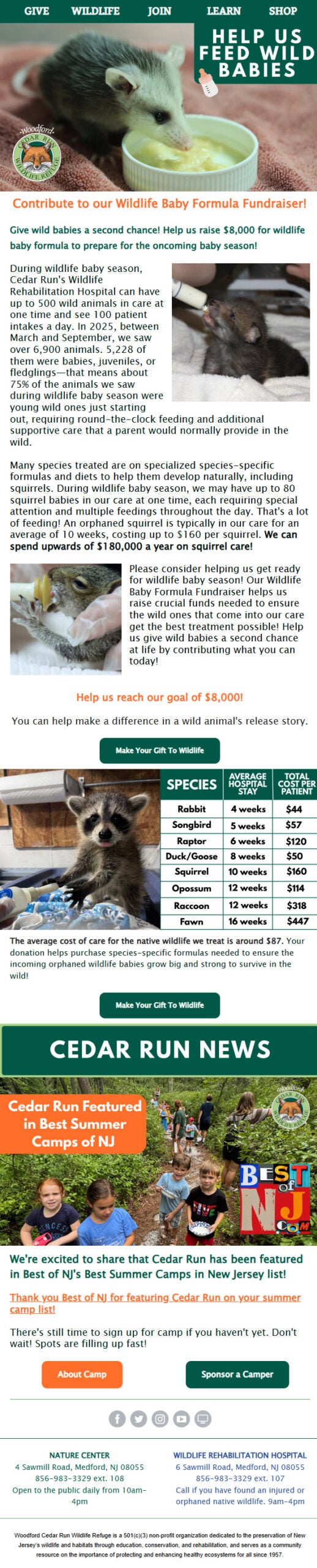
- Highlight Specific Impact Amounts: In the example below, Woodford Cedar Run Wildlife Center includes a donation impact block, showing how much it typically costs to care for the specific types of animals in their care.
- Stick to a Single Call to Action (CTA): Avoid “choice paralysis” by keeping the focus on one primary action you’d like supporters to take. If you’re working to drive donations for a specific campaign, link only to that campaign. General asks can happen at another time.
- Repeat the CTA Multiple Times: By focusing on one primary action you’d like your readers to take, you open up the opportunity to repeat that call to action more than once. Include links near the top for skimmers and at the bottom for deep readers.
- Thank Donors Before Making New Asks: Follow the “Ask-Thank-Report-Repeat” cycle: Ask for a donation, thank your donors promptly, and report on the impact of their gift and the campaign before you start the cycle over again. This ensures donors feel appreciated for their last gift instead of bombarded.
- Include Social Proof or Testimonials: Use quotes and stories from people supported by your mission and donations, or from long-time donors and supporters to help illustrate the importance of your ask and mission.
- Use Video and Imagery: Just as social proof and real life stories can help bring your campaigns to life for your donors, videos and imagery can help entice visually engaged readers and add depth to your storytelling.
- Prioritize Storytelling Over Stats: One person’s real-life experience is more engaging and authentic than bar graphs, charts, and percentages. Remembering the human element of your outreach helps to build relationships with your community.
- Illustrate Urgency with Deadlines: When a campaign is timebound, communicate this clearly to help recipients understand the deadline. Incentives like Give by midnight to have your impact doubled or last-chance messaging can help drive additional funds and keep the campaign on track.
Design and Format
There are some key, easy elements of email design that you should always follow. Note one major addition: if your email isn’t mobile-friendly, it’s basically invisible. Because more than 60% of email is opened on devices other than desktop computers, the physical layout of your message determines whether a donor engages or deletes it immediately. Here are some good guidelines to make your designs shine.
- Utilize Professionally Designed Templates: Most nonprofits run on tight budgets and tight timelines. Using a professional email program like Constant Contact can give you access to predesigned templates. Simply add your own branding.

If you’re just starting out and you’re not really sure how to build a campaign or how to structure a campaign for maximum effect, there are some really good templates that are easy to manipulate and edit.
Gloria Hammond
Director of Communications, National Golf Course Owners Association Canada
- Ensure Mobile Responsiveness: You put a lot of time, thought, and effort into your email layout, but if your mobile readers open it and can’t easily navigate the content, images, and most importantly, CTAs, your email won’t be effective. Most professional email software will help ensure your emails are mobile friendly.
- Use Buttons Instead of Text Links: Button calls to action are not only attention-grabbing in a desktop email; they work well for mobile users, too, creating a visually appealing and easy-to-tap way to open a donation link.
- Keep Body Copy Concise: Think about how busy your audience is and aim for brevity. Constant Contact advises customers to shoot for around 1,200 characters on average for the highest clickthrough rates. This is enough room to tell a story without asking for too much of your donors’ time.
- Limit Your Fonts: Your emails should encourage your donors to take you seriously and enable them to easily discern your message. Use a maximum of two fonts, with at least 21-point text for your headline and 14-point text for the body, to help readers immediately see and understand what you are communicating.
- Optimize for Dark Mode: Test your email in dark mode to ensure logos have transparent backgrounds and font colors are readable against dark backgrounds.
- Use Inclusive Design: Be inclusive and accessible for all your donors and supporters. This means being mindful of font and background colors, applying alt text to all imagery, and not making your entire email a single clickable image. This ensures accessibility for those using screen readers and provides context if images are blocked.
Timing and Frequency
Success is often about catching the donor at the right moment. Moving away from manual processes to automated workflows allows you to reach a broader audience more quickly and with more customization than ever before. When you are able to ask donors at the right time, automatically thank them, and keep them regularly updated, you can go beyond simply soliciting donations and start building relationships.
“The beauty of our marketing using Constant Contact is that it is now automated. It’s not manual any longer. We have a broader reach, a quicker reach, and a more customized reach than we did prior,” said JoAnne Ryan, CEO of Ronald McDonald House Charities of Rochester.
- A/B Test Your Send Times: Use testing to find the “magic hour” when your specific donors are most likely to click and donate. How can you do this? Split a larger list or segment into smaller sections and send the same email at different times, tracking which send time received the highest donations.
- Welcome New Subscribers: Welcome emails that go out to your new subscribers can drive high engagement and help set the tone for you and your mission. Automating these at signup removes the guesswork and saves time.
- Automate Your Follow-ups: Creating automated follow-up emails to thank donors, share campaign progress, and show end results and impact can create an ongoing conversation rather than a one-off ask for your donors. Follow-ups help them feel involved and seen.
- Reach Out Regularly: Even if you don’t have a current campaign or specific fundraising drive underway, regularly reaching out to your supporters helps them stay engaged and informed. These regular communications can also help generate donations.Example: For every fundraising campaign email sent, Cedar Run Wildlife Center averages $330 and manages to capture an average donation of more than $114 by simply including a passive donation link in their general communications emails.
“We get so many more donations from our emails than we ever thought we could,” Development Director Lisa Franco said.
Testing and Optimization
The only way to know what’s working, and how to make it work even better, is by using the data at your fingertips. Use your email reporting tools and metrics (like subscribes, unsubscribes, and clickthrough rate) to refine your approach with every send. Instead of relying on assumptions, successful nonprofits use reporting to determine what resonates and what needs improvement.
- Test Subject Lines: The subject lines that work best often vary from nonprofit to nonprofit. Test variants focused on urgency, personalization, impact, trends, and catchiness to see which method captures the most attention (and donations).
- Test Content Types: To understand how your audience best receives information, test different types and combinations of content in your emails, from images and videos to straightforward messaging.
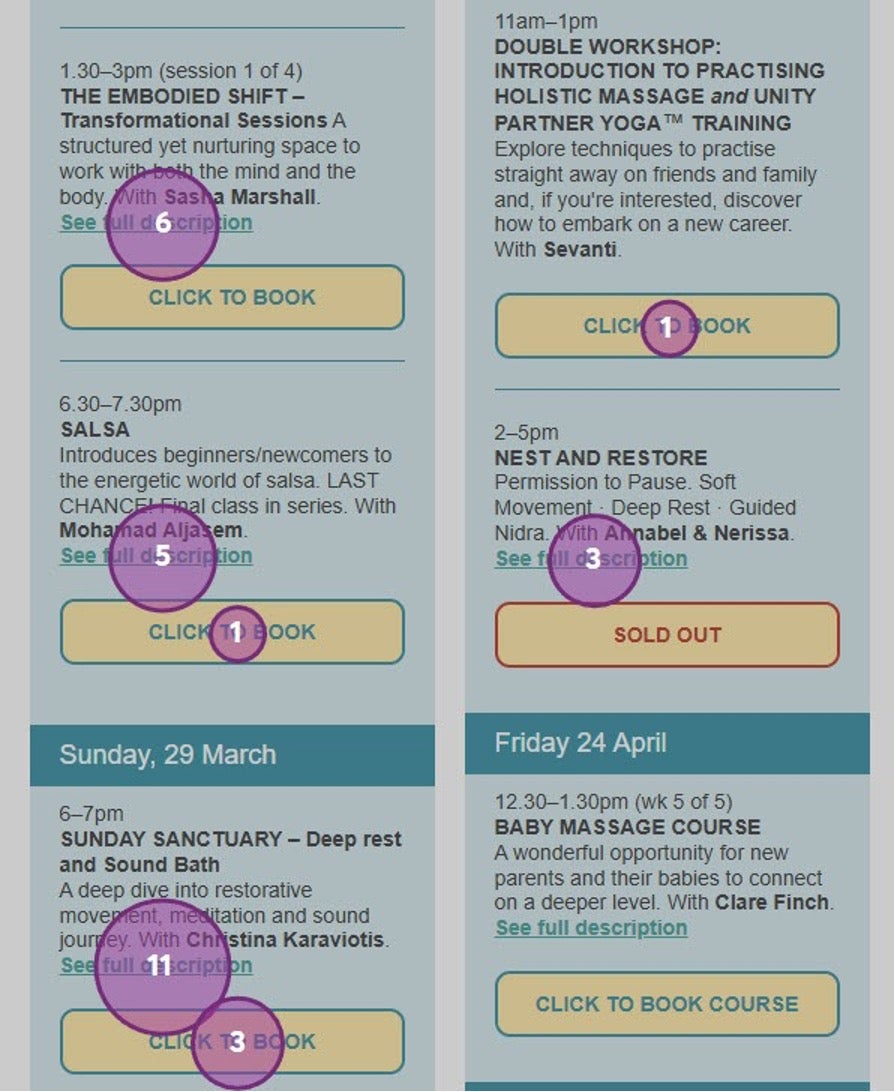
- Watch Those Clicks: Heat map tools can help you see exactly where readers engage in your emails and lean into those “hot spots” in future communications.
“I can see exactly where people click, whether they prefer text links or buttons, which sections they skip, and what catches attention,” said Rob Shepherd, Communications Manager for The Unity Centre. “It helps us refine structure and maximize engagement.”
Deliverability and Compliance
The most beautiful email in the world won’t work if it ends up in the spam folder, and with email providers employing stricter guidelines each year, staying on top of your deliverability game is key.
- Clean Your Email List Regularly: Correcting or removing inactive addresses improves deliverability and open rates. Jon Marburger, Director of Email Delivery and Deliverability at Constant Contact advises nonprofits to stay on top of list hygiene: “Keeping a core engaged audience that you know is deliverable is the key to deliverability.”
- Monitor Your Bounce and Complaint Rates: Watch these metrics to understand the health of your email list. High bounce and complaint rates can harm your sender reputation, sending you to your subscribers’ spam folders.
- Add Clear Unsubscribe Options: Making it visible, functional, and easy to leave is a requirement for trust as well as required by law in most countries and regions. Digital marketing tools like Constant Contact automatically provide this option in their emails and as part of their service.
Conclusion: Smarter Fundraising with Blackbaud + Constant Contact
Mastering these fundraising email best practices is much easier when you’re using professional digital marketing tools that are integrated into your existing fundraising technology. The integration between Blackbaud Raiser’s Edge NXT and Constant Contact is designed specifically for social impact organizations. By syncing donor data automatically, you can create highly segmented, personalized campaigns without the headache of manual data entry.
Using these integrated solutions and best practices from this article can streamline your email strategy and make it a routine step in successful campaigns.