Symbols in Subject Lines… ❤️ Them or ✂️ Them?

Some of the Blackbaud marketing team stirred up some internal controversy by sending out an email that contained stars in the subject line (highlighted below.)
The main push back was that including symbols like stars or hearts in the subject line increases the likelihood that a message would land in the recipient’s spam folder and goes against “best practices.”
Then two days later I received a note from Travelocity with the exact same stars in the subject line. I immediately sorted my Outlook by subject and found that I frequently received subject lines with symbols and in recent months I was receiving them more frequently from a wider variety of commercial emailers. Interestingly enough, there were no emails with symbols from other non-profits or events.
This got me thinking… If major commercial emailers are including symbols in their subject lines, then is the practice of including symbols in subject lines really all that taboo?
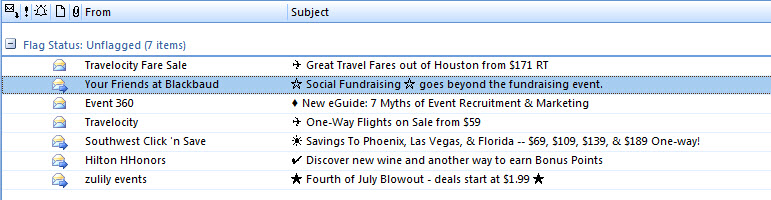
After spending some quality time with Google, my conclusion is that when used strategically including symbols in your subject lines can help your message stand out in a crowded inbox and potentially increase open rates. Experian reported in that subject lines with symbols had a higher unique open rate in 56% of brands they analyzed.
★ Tips to Effective use of Symbols in Subject Lines ★
- Select the right symbol. Your symbols should make sense with the content of your email message and the branding of your event/organization. For most event fundraisers, symbols like stars or balloons can communicate a fun, social spirit that fall naturally in alignment with how you want to position your events. In the examples above you see that it’s completely logical to see an airplane associated with vacation or travel provider.
- Not all symbols are created equal. Some symbols appear in some email clients and not in others. Test your preferred symbol in several email clients and on several devices to make sure your star still looks like a star for the majority of your readers.
- Test the waters with A/B Testing. This style of testing requires you to send out two identical messages with 1 aspect of the email that has changed. In this case, the difference between the two campaigns should be the presence (or not) of symbols in your subject line. Compare how the response rates were impacted by the subject line adjustment.
- Use the technique sparingly. If you do see increases in open rates based on your A/B testing, don’t immediately start adding stars and hearts to every email that leaves your event. Overuse of this technique could spoil the novelty and prevent the uptick in future messages.